National data strategies are live
Government programmes across the region are building analytics capability inside public bodies.


R, Python and SQL are named on the official page, which no other qualification here does. Behind the tooling sit statistical inference, predictive modelling, time series work and machine learning applied to business questions.
Note: Duration will be based on your experience and it can be advanced bachelors too which differs from prospects to prospects
Qualifi rarely names a technology. On this award it names three: learners are expected to gain skills in mathematics, statistics and programming in R, Python and SQL. That single sentence tells you more about what the study involves than most listings manage in a page, and it sets a clear expectation about the kind of work you will be doing.
The published subjects run from Exploratory Data Analysis and Statistical Inference through predictive modelling, Time Series Analysis, unsupervised multivariate methods and machine learning. Classical statistics first, then the modelling techniques built on top of it. The stated audience is people aiming at data scientist, data analyst or artificial intelligence roles.
The register entry reads: Level 7, 120 credits, number 603/6693/X. Study hours are not stated, and the centre specification carries an October 2020 date — worth knowing in a field where tooling moves quickly.

R, Python and SQL are published by the awarding body, not inferred from a subject title.
Exploratory analysis and statistical inference come first, which is the right order for credible work.
Forecasting from sequential data gets dedicated attention rather than a passing mention.
The outcomes frame machine learning as something aimed at business questions, not an end in itself.
Evaluating, structuring and cleaning data appears as a published outcome — the unglamorous majority of the job.
Relevant industry experience stands as a published alternative to a degree.
 Q
Government programmes across the region are building analytics capability inside public bodies.
Regional financial institutions hire heavily for modelling, risk analytics and fraud detection.
R, Python and SQL on a syllabus are easier for an employer to assess than a vague subject title.
Time series work suits energy, commodities and logistics planning across the Gulf.
Approved centres deliver Qualifi qualifications internationally.
Nothing is published by the awarding body, so insist on an itemised written quotation.
Join professionals across leading organizations worldwide
Graduates placing at world-class organisations across aviation, energy, finance and government
















Join our growing global network of industry leaders
Real-world perspectives from the minds shaping global business education

Alexander is a leader in AI and cloud integration, specializing in ethical AI strategy and financial services. He develops courses on Machine Learning, NLP, and AI ethics, driving tech business growth.

Dr. David Holliman, an educator with 15+ years of experience, is Chairman of Holliman Holdings, managing business operations in tourism, trading, asset management, and education

Dr. Othman Abu Khurma, a passionate science educator with 18 years' experience in Jordan and the GCC, excels in designing engaging teaching materials, fostering dynamic discussions, enhancing learning for educators and students.

Prof. Steve, a global leader and entrepreneur with 20+ years of experience, delivers corporate training and academic courses on negotiation, conflict resolution, mediation, and cross-cultural communication.

Veronika Knight delivers practical, human-centered learning experiences for corporate teams across the UAE and GCC. Her approach focuses on developing soft skills and encouraging meaningful behavioural change, helping learners apply their knowledge with confidence in the workplace.

Shyma brings over 10 years of teaching experience and a background at Microsoft, combining academic expertise with practical industry insights to support learners’ professional growth.
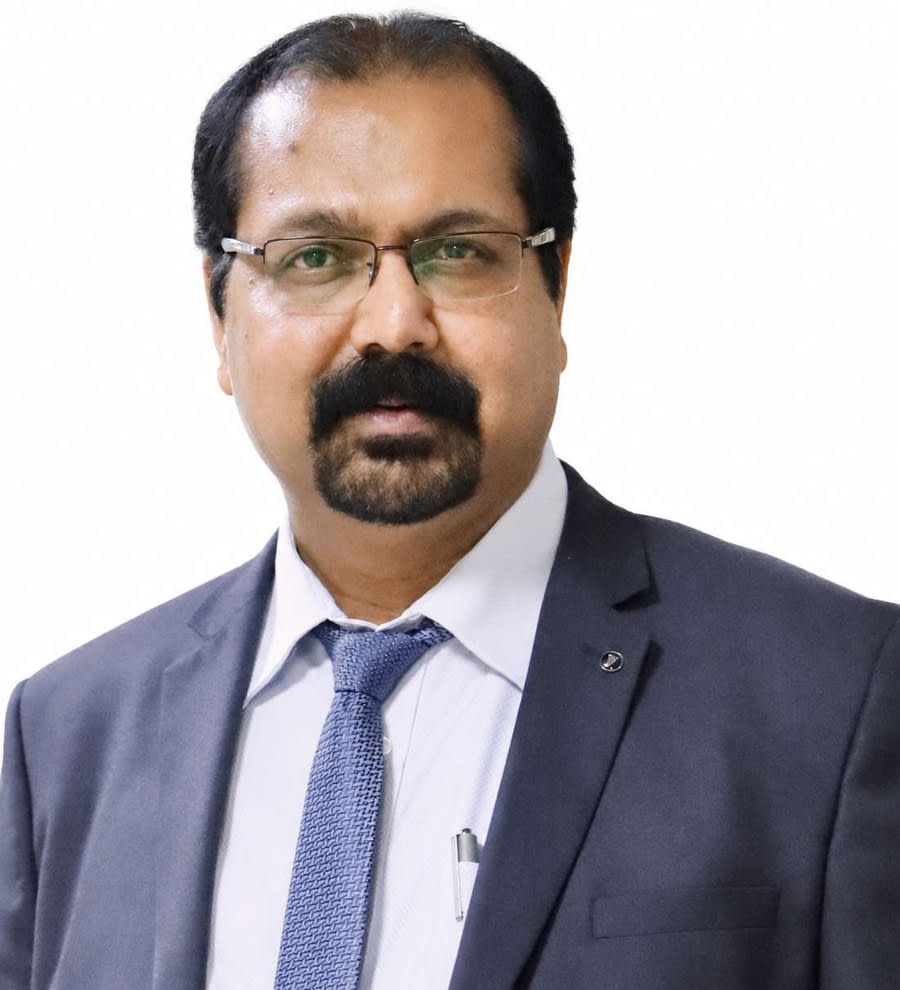
Dr. Shanmugan brings over 26 years of experience in management education and research across India and the UAE, with expertise in marketing, international business, research methods, and digital transformation.

Prof. Yana Nikitina is an accomplished economist, lecturer, and researcher with a PhD in Economics and a Master’s in Education Leadership. She brings extensive experience in teaching Economics, Finance, Accounting, and Business, with a strong commitment to student-centred learning, research excellence, and professional development.
Speak to our admissions team for a personalised breakdown based on your intake and study mode.
Request Fee StructureNo commitment required. We'll connect you with an advisor.
Probably seven, though we have left the published list untouched. Qualifi prints five bullets, but two of them clearly run two titles together: "Fundamentals of Predictive Modelling Advanced Predictive Modelling" and "Unsupervised Multivariate Methods Machine Learning". The published outcomes treat predictive modelling, data reduction and machine learning as separate areas, which supports reading them as four distinct subjects rather than two. Correcting an awarding body's own list is not our place, so we have flagged it instead. The October 2020 specification will give the definitive count.
Qualifi does not say, which is itself worth knowing. The published outcome is that you will develop enough skill in R, Python and SQL to carry out advanced analysis, phrasing that suggests the languages are taught rather than assumed. Entry is based on a Level 6 qualification, a degree or three years of relevant experience, with no coding test mentioned. In practice, arriving with some familiarity will make the statistical subjects far less punishing. Ask the centre what prior exposure its intake typically has.
Judge it on what is in it rather than on the date alone. Statistical inference, predictive modelling, time series analysis and multivariate methods are stable foundations, and R, Python and SQL remain the working tools of most analytics teams. What has moved fastest since 2020 sits above that layer: large language models, newer frameworks, the way teams deploy models into production. Ask your centre directly when it last refreshed the taught material and what tooling its assignments use, because centres revise delivery independently of the specification.
Qualifi's own description uses that phrase, while the registered title on the framework is simply "Level 7 Diploma in Data Science". We use the registered title throughout, since that is what will appear on your certificate and what a university or employer will verify. The distinction is not pedantry: "postgraduate diploma" carries specific expectations in UK higher education, usually of a university award, and this is a regulated vocational qualification from an awarding body. Quote the registered title and the qualification number in any application.
That is entirely the centre's decision. What Qualifi contributes is the design, the regulation and the final certificate; who teaches you, when, and for how much is settled between you and the centre. No total qualification time is published for this award either, so there is no official hours figure against which to sanity-check a proposed timetable. Before paying anything, ask for the cohort dates, an expected completion date, and a price that separates tuition from registration and certification.
They answer different questions. The IT award is broad computing — networks, databases, information systems, a delivery project and a subject on technology's effect on society — and it publishes a total study time of 1,200 hours. This one is narrow and quantitative: statistics, modelling, forecasting and machine learning, with three named languages. If your work is building and running systems, the IT award fits better. If your work is extracting answers from data, this is the closer match.
Share a few details and our admissions team will reach out to guide you through the next steps.