Trade is the regional business
Ports, re-export and logistics corridors make international trade law an everyday commercial concern.


Trade across borders, money laundering and fraud, patents and brands, arbitration instead of courtrooms. Commercial law with the domestic foundations left out, plus a choice of two optional subjects and a research subject of its own.
Note: Duration will be based on your experience and it can be advanced bachelors too which differs from prospects to prospects
Six required subjects set the scope: International Trade Law, Commercial Trust Law, Industrial and Intellectual Property Law, Law of Financial Crimes, Company Law, and Legal Research and Research Methods. Two further subjects are published as optional — International Commercial Arbitration, and Corporate Governance – Principles and Practices. Very few awards in this listing publish a required and optional split at all, so the choice is a real feature rather than a formality.
The emphasis never wavers from commerce conducted across jurisdictions. Goods moving between countries, money that needs tracing, ideas that need protecting, disputes settled by arbitrators rather than judges. Qualifi describes the aim as developing legal skills, analysis and logical thinking that can be applied in further study, in the legal profession and in public service — the last of those three named on no other law page here.
On the register it carries 120 credits at Level 7 under number 603/4199/3. No total study time is given.

International Trade Law anchors the award in how goods and contracts actually move between countries.
Law of Financial Crimes gives dedicated attention to fraud, laundering and the duties that follow.
Industrial and Intellectual Property Law covers the assets that often matter most in a modern deal.
International Commercial Arbitration is offered as a choice, reflecting how cross-border disputes are usually resolved.
Legal Research and Research Methods is a required subject here, not an assumed skill.
Qualifi lists public service alongside further study and the legal profession as a place this knowledge applies.
 Q
Ports, re-export and logistics corridors make international trade law an everyday commercial concern.
Cross-border contracts in the Gulf commonly send disputes to arbitration rather than national courts.
Anti-money-laundering and sanctions obligations now reach well beyond the banking sector.
Regional firms are increasingly protecting intellectual property as a tradeable asset.
Qualifi names public service as a setting where this legal knowledge applies.
No price is published by the awarding body. Insist on a written, itemised quotation.
Join professionals across leading organizations worldwide
Graduates placing at world-class organisations across aviation, energy, finance and government
















Join our growing global network of industry leaders
Real-world perspectives from the minds shaping global business education

Alexander is a leader in AI and cloud integration, specializing in ethical AI strategy and financial services. He develops courses on Machine Learning, NLP, and AI ethics, driving tech business growth.

Dr. David Holliman, an educator with 15+ years of experience, is Chairman of Holliman Holdings, managing business operations in tourism, trading, asset management, and education

Dr. Othman Abu Khurma, a passionate science educator with 18 years' experience in Jordan and the GCC, excels in designing engaging teaching materials, fostering dynamic discussions, enhancing learning for educators and students.

Prof. Steve, a global leader and entrepreneur with 20+ years of experience, delivers corporate training and academic courses on negotiation, conflict resolution, mediation, and cross-cultural communication.
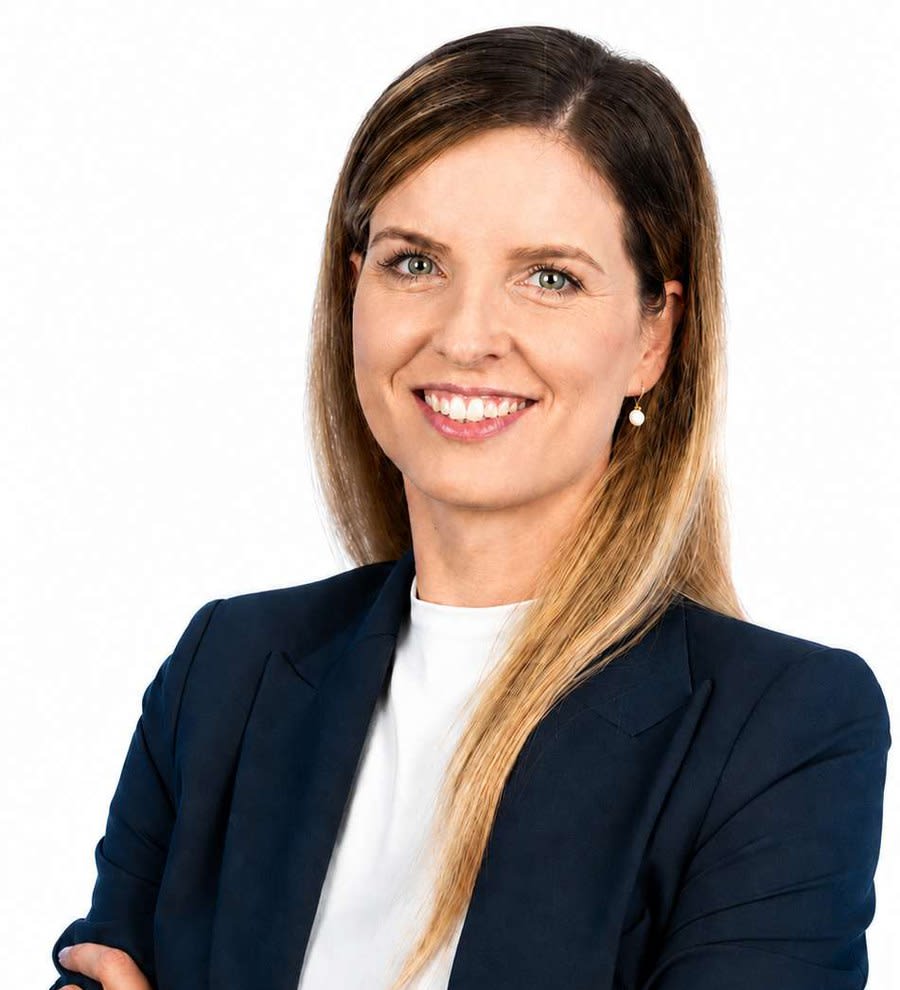
Veronika Knight delivers practical, human-centered learning experiences for corporate teams across the UAE and GCC. Her approach focuses on developing soft skills and encouraging meaningful behavioural change, helping learners apply their knowledge with confidence in the workplace.

Shyma brings over 10 years of teaching experience and a background at Microsoft, combining academic expertise with practical industry insights to support learners’ professional growth.

Dr. Shanmugan brings over 26 years of experience in management education and research across India and the UAE, with expertise in marketing, international business, research methods, and digital transformation.
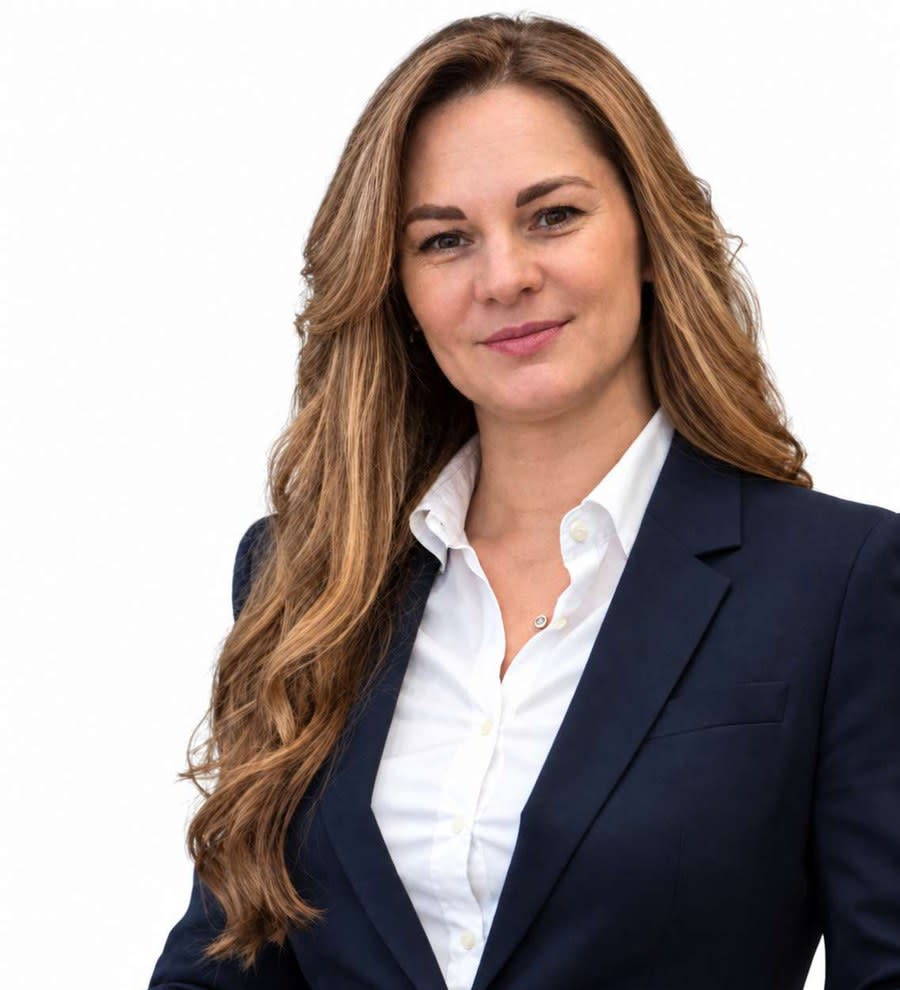
Prof. Yana Nikitina is an accomplished economist, lecturer, and researcher with a PhD in Economics and a Master’s in Education Leadership. She brings extensive experience in teaching Economics, Finance, Accounting, and Business, with a strong commitment to student-centred learning, research excellence, and professional development.
Speak to our admissions team for a personalised breakdown based on your intake and study mode.
Request Fee StructureNo commitment required. We'll connect you with an advisor.
Qualifi does not say, and that is a genuine gap rather than an oversight on our part. The page lists six required subjects and two optional ones, but gives no credit value for any subject and no rule about how many options must be completed to reach 120 credits. Both might be required; one might be enough. The centre specification dated April 2023 will carry the answer, so ask your centre for it and get the choice rules confirmed before you commit to a study plan.
It might support an application. It does not deliver one. The published progression wording refers to an "LLM with the associated partner University", which sounds specific but identifies no institution anywhere on the page, and sets out no credit transfer terms. A Master of Laws is awarded by a university, under that university's own admission rules, and it will form its own view of a Level 7 diploma from an awarding body. Contact your intended university directly, quote the qualification number, and rely on what it tells you rather than on the phrase.
No, in any jurisdiction. The award is not a qualifying law degree, confers no practice rights and carries no published recognition from the Solicitors Regulation Authority, the Bar Standards Board or CILEX. You cannot use it to describe yourself as a lawyer, solicitor or barrister, and it does not entitle you to carry out reserved legal activities. Where it earns its keep is in commercial roles that need legal understanding without a practising certificate: contracts, compliance, trade operations, in-house support. Anyone targeting practice should start with their own regulator's published route.
Qualifi's entry wording points at three groups: people holding a Level 6 qualification, people with work experience in the legal sector, and graduates from other disciplines who want to build a business career. Put together, the profile is someone already in commercial life — trade, shipping, finance, compliance, corporate administration — who keeps running into legal questions and wants to handle them properly. Since the connector between the three routes is "and/or", whether experience alone opens the door is a question only the centre can settle.
Your approved centre, on both counts. Qualifi's role stops at writing, regulating and certificating the qualification; it runs no classes and publishes no price. There is no official study-hours total for this award either, which removes the usual benchmark for judging whether a proposed schedule is realistic. Useful questions at enquiry: when the next cohort begins, how long previous groups have taken, and what the quoted figure includes once registration and certification are added.
Because this award assumes you are not starting from scratch on the basics, or that you do not need them for the work you do. The subject list goes directly to commercial and cross-border material: trade, trusts, intellectual property, financial crime, company law, with arbitration and governance as published options. The general foundations of English law — contract, tort, criminal, land, equity — belong to the separate Level 7 Diploma in Law, which is designed for non-law graduates wanting that grounding. If you want the foundations, that is the one to read.
Share a few details and our admissions team will reach out to guide you through the next steps.